

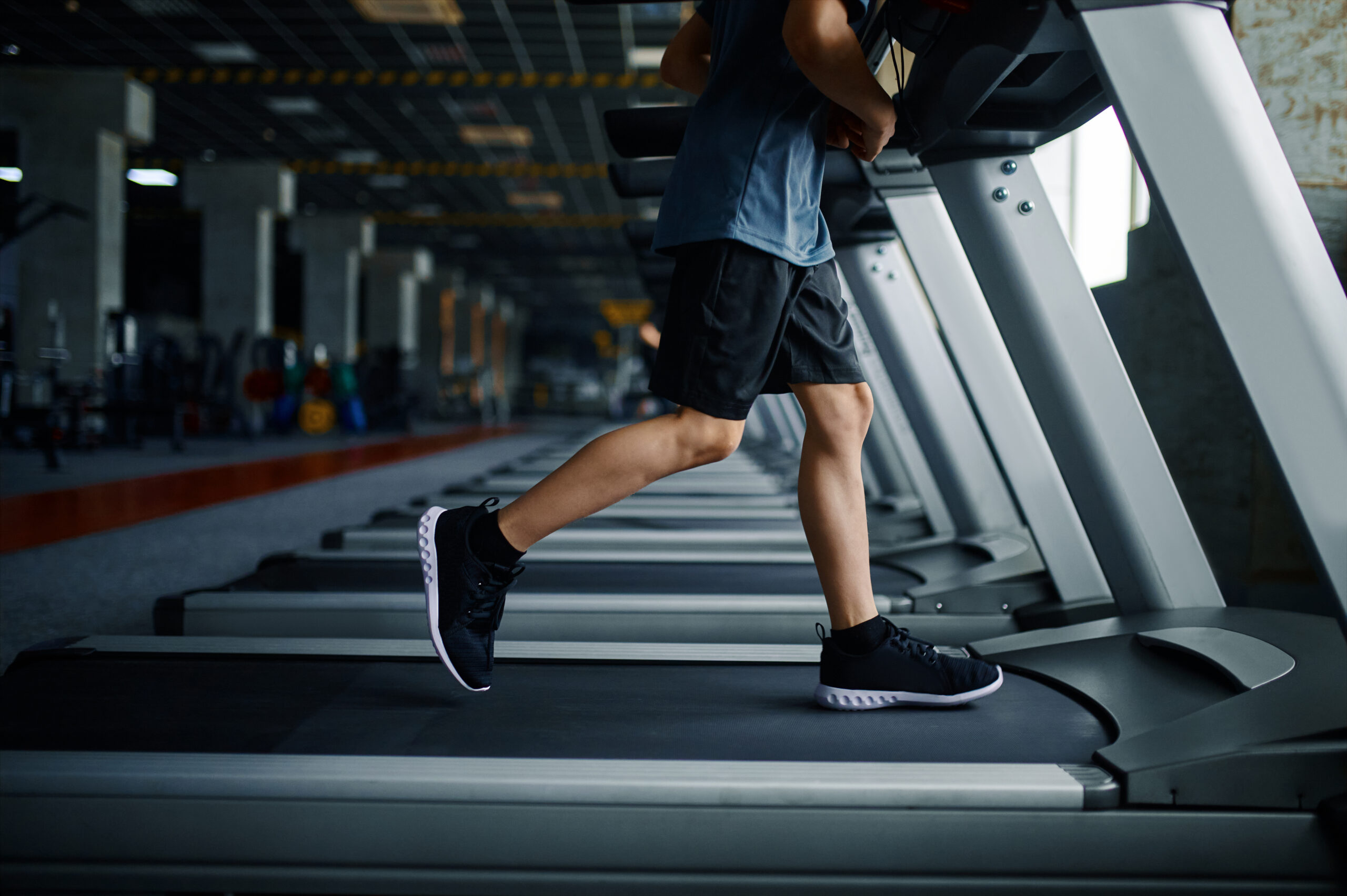
Running is one of the most effective full-body exercises — it strengthens muscles, boosts bone density, and delivers an excellent cardiovascular workout. But if you suffer from knee pain, arthritis, or past injuries, you’ve probably wondered: Is treadmill running bad for your knees? Or is it actually safer than pounding the pavement outdoors?
Here’s the science-backed answer, plus practical tips to protect your joints.
How Treadmills Affect Your Knees (The Good News)
Modern treadmills are designed with cushioned decks that absorb 15–40% more impact than asphalt or concrete. This built-in shock absorption can significantly reduce stress on your knees, hips, and ankles compared to running on hard outdoor surfaces.
A study from the Journal of Science and Medicine in Sport found that cushioned treadmill belts lower peak ground reaction forces and loading rates on the lower limbs — making treadmills often gentler on bad knees than sidewalk or road running.
When Treadmill Running Can Actually Hurt Your Knees
Despite the cushioning, problems arise when:
- Your running form breaks down (common when you’re bored or distracted)
- You take overly long strides because the belt pulls your foot backward
- You run at the same pace/speed without variation for months
- The treadmill has poor or worn-out cushioning
These issues can increase stress on the patellar tendon and lead to runner’s knee, IT band syndrome, or general joint soreness.
Benefits of Treadmill Running for Bad Knees
- Controlled environment – Adjust speed and incline instantly without hills or uneven terrain.
- Consistent cushioning – No concrete, gravel, or potholes.
- Weather-proof – Train year-round without slipping on ice or overheating.
- Precise pacing – Perfect for walk/run intervals that ease joint stress.
- Immediate stop option – Hit the emergency stop if pain flares up.
Outdoor Running vs. Treadmill: Which Is Better for Your Knees?
| Factor | Outdoor Running | Treadmill Running | Winner for Bad Knees |
|---|---|---|---|
| Surface cushioning | Varies (often very hard) | Consistent & shock-absorbing | Treadmill |
| Terrain variation | Hills, camber, uneven ground | Flat & predictable | Treadmill |
| Weather impact | Rain, ice, heat | Always ideal conditions | Treadmill |
| Muscle activation | More stabilizing muscles used | Slightly less overall activation | Outdoor |
| Mental engagement | More stimulating | Can feel monotonous | Outdoor |
Verdict: For most people with knee pain or arthritis, a quality cushioned treadmill is easier on the joints — especially during recovery or bad weather.
7 Pro Tips to Protect Your Knees on a Treadmill
- Choose a treadmill with excellent cushioning – Look for models with FlexSelect, Reflex, or similar deck technology (NordicTrack Commercial series, Sole F80, Horizon 7.8 AT are top choices).
- Keep strides short and quick – Avoid overstriding; let the belt do the work.
- Land mid-foot – Heel-striking increases braking forces on the knee.
- Maintain good posture – Core engaged, shoulders relaxed, slight forward lean from the ankles (not the waist).
- Use the 1% incline rule – Set incline to 1–2% to mimic outdoor wind resistance and reduce “flat belt” stress.
- Incorporate walk/run intervals – Even elite runners use this to protect joints.
- Invest in proper running shoes – Replace them every 300–500 miles and get fitted at a specialty running store.
Final Answer
No — running on a treadmill is not inherently bad for your knees. In fact, with proper form and a well-cushioned machine, it’s often the smarter, lower-impact choice — especially if you have arthritis, past injuries, or live in harsh weather.
Combine treadmill days with occasional outdoor runs for variety and stronger stabilizing muscles, and you’ll get the best of both worlds without sacrificing your knees.
Ready to run pain-free? Start slow, focus on form, and choose a treadmill designed for joint health. Your knees will thank you. 🏃♂️💨
