

We all know that exercise has a ton of benefits for overall health, but can it actually help your hair grow? While there isn’t a magical workout that guarantees faster hair growth, some studies suggest that exercise might play an important role in supporting hair health. Here’s a deep dive into the science behind exercise and hair growth, backed by real research and data.
How Hair Growth Works
To understand how exercise might impact hair growth, let’s first take a quick look at how hair grows. Hair growth occurs in cycles with three phases:
- Anagen (Growth Phase): Hair is actively growing.
- Catagen (Transition Phase): Hair growth slows.
- Telogen (Rest Phase): Hair rests before shedding.
Healthy hair growth happens when hair follicles stay in the anagen phase longer, and this is where exercise might help by improving blood flow and reducing stress, both of which support follicle function.
What Exercise Does for Your Body (and Hair)
1. Improves Circulation
Exercise increases blood flow, and that’s a big win for your scalp. Better circulation means more oxygen and nutrients can reach the hair follicles, which are essential for healthy hair. A healthy scalp environment can support the hair growth process.
A study published in PubMed Central found that exercise was associated with improved circulation, which can help nourish hair follicles and support growth.
2. Reduces Stress
We all know that stress isn’t good for our overall health, and it can be a major cause of hair shedding. Chronic stress leads to increased levels of cortisol, which can disrupt hair growth. Thankfully, regular exercise is a proven way to lower stress hormones and help the body stay in a balanced state.
Exercise boosts endorphins, our “feel-good” hormones, and helps reduce the negative effects of stress, potentially reducing hair loss caused by anxiety or tension.
3. Supports Hormonal Balance
Exercise plays a key role in balancing hormones, which is crucial for hair health. Improper hormonal balance, whether from conditions like PCOS or thyroid imbalances, can lead to hair thinning. By supporting the body’s natural hormone regulation, exercise may indirectly keep hair follicles in the optimal growth phase.
What Real Research Shows
Exercise and Androgenetic Alopecia (Pattern Hair Loss)
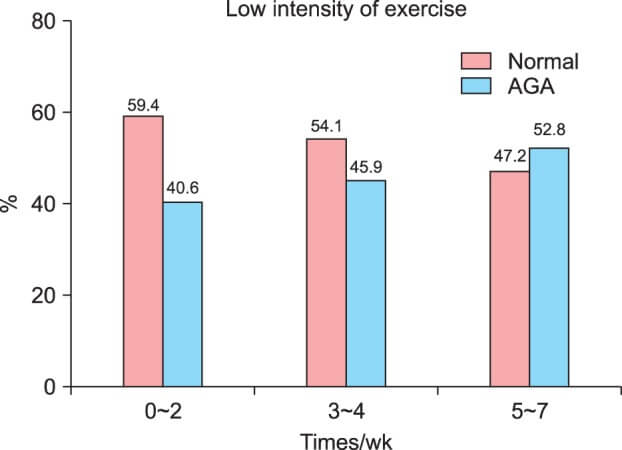
A 2017 study published in PubMed Central looked at the relationship between exercise and androgenetic alopecia (AGA) — a common form of hair loss that is largely influenced by genetics. The study surveyed 1,182 adults and found some interesting patterns:
Key Data:
- 45.2% of participants had AGA.Low-intensity exercise was associated with a higher prevalence of AGA, meaning those who exercised more frequently had a slight increase in hair thinning compared to those who did less exercise.
Figures in the Study:
The graphs in this research showed that low-intensity exercise was most common among people with hair loss, but this doesn’t necessarily mean exercise caused the hair loss. The study instead suggests that the effect of exercise on hair loss is more complex, with factors like genetics, lifestyle, and diet also at play.
You can explore the full study and figures directly here.
Exercise and Mental Health in Alopecia Areata
Another study explored the connection between physical activity and mental health in people suffering from alopecia areata (another form of hair loss). It found that people who didn’t meet the recommended physical activity guidelines had worse mental health scores, which indirectly affected hair health. This study used statistical methods to show a link between physical activity levels and mental well-being, which might impact hair loss.
Types of Exercise That Might Benefit Hair Health
Not all exercises are created equal when it comes to supporting hair growth. Different types of exercise offer different benefits:
- Cardiovascular Workouts (e.g., Running, Swimming):
These activities raise your heart rate and increase blood flow, helping deliver more oxygen and nutrients to your scalp. - Strength Training:
Lifting weights or doing bodyweight exercises can help regulate hormones and improve metabolic health, both of which indirectly support healthy hair follicles. - Yoga and Stress-Reducing Practices:
Poses that improve blood flow to the scalp, combined with the stress-reducing effects of yoga, can create a healthier environment for hair to grow.
What Exercise Can’t Do
While exercise can support overall hair health, it is not a cure for hair loss. Exercise alone cannot reverse hair thinning caused by genetics or medical conditions like androgenetic alopecia. It also won’t grow hair if the follicles are already damaged beyond repair.
A Balanced Approach for Healthier Hair
Exercise should be part of a holistic lifestyle that includes:
- A balanced diet rich in proteins, vitamins, and minerals.
- Stress management through relaxation techniques and mindful movement.
- Proper scalp care and hygiene.
- Adequate sleep and hydration to keep the body — and hair follicles — healthy.
Exercise plays a significant role in maintaining overall health, which in turn supports healthier hair.
Final Thoughts
The research on exercise and hair growth is still evolving, but we can confidently say that exercise improves circulation, reduces stress, and helps balance hormones — all factors that can help maintain a healthy environment for hair to grow. Though exercise alone won’t guarantee a thick mane, it’s an essential part of a healthy lifestyle that supports hair health.
