

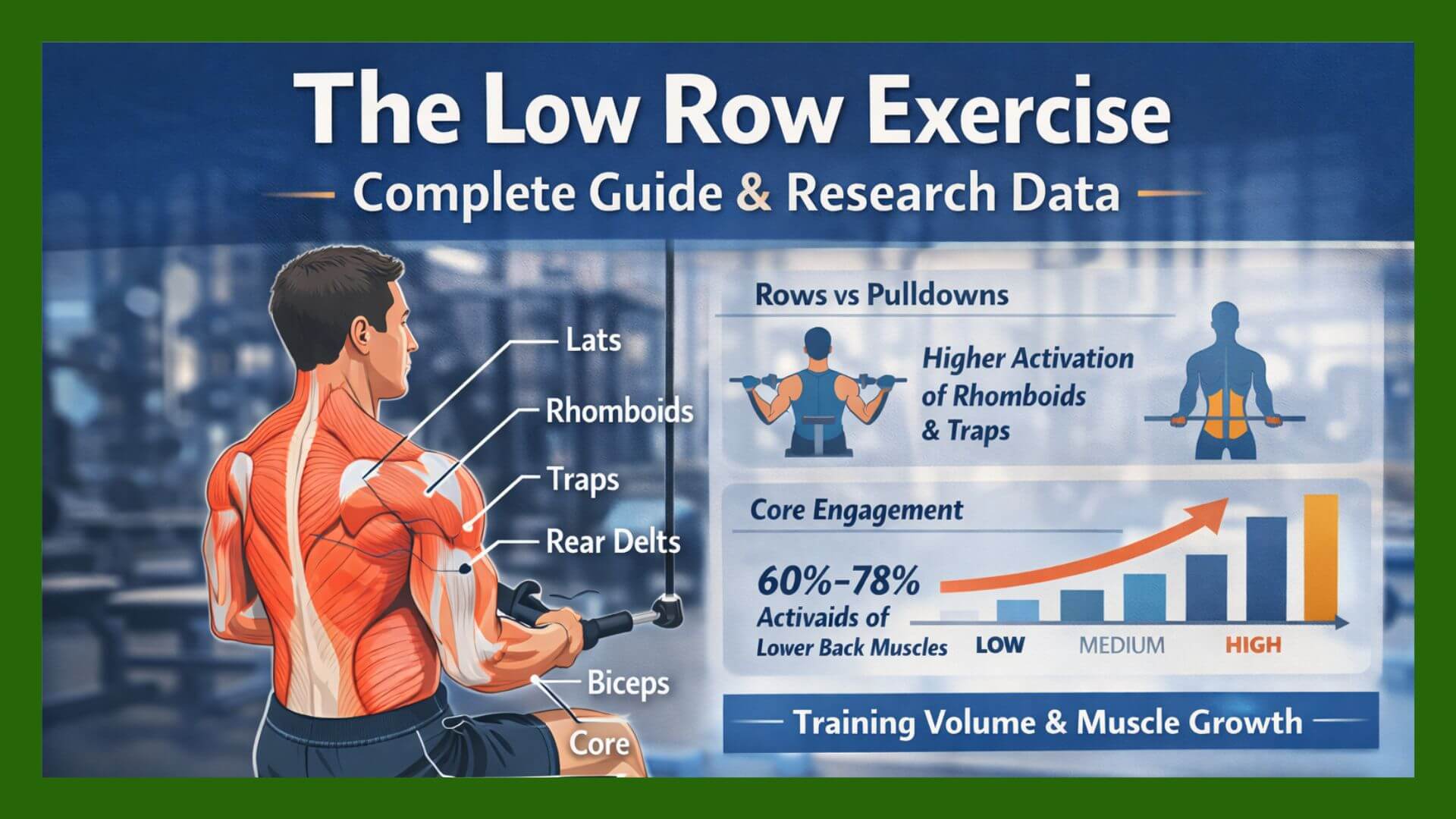
The low row is a foundational back exercise. It works multiple muscle groups at once and is used in strength training, rehabilitation, and general fitness. In this guide, you’ll find clear explanations, research data, and insights based on scientific studies. I’ll explain what the exercise does, how it performs compared with other pulls, and why it matters for strength, muscle growth, and function.
What the Low Row Does
The low row (most often performed as a seated cable row) targets the upper and mid‑back. Major muscle groups involved include:
- Latissimus dorsi (lats) – the largest back muscle
- Rhomboids and middle trapezius – for shoulder blade retraction
- Rear deltoids and traps – for upper‑back support
- Biceps brachii – assists with pulling
- Core stabilizers – help maintain posture
This makes it a compound exercise rather than an isolation movement. That matters for overall strength and muscle development.
Research on Muscle Activation
Surface electromyography (EMG) is used in research to show how much a muscle fires during an exercise.
Comparison With Other Back Pulls
A study comparing rows and pulldowns found that the seated row produced higher activation of the middle trapezius and rhomboids than lat pulldowns, even when grip variations were adjusted. This means the seated row may be particularly effective at targeting the muscles that pull the shoulder blades back. In the same research, the seated row also maintained higher ratios of latissimus dorsi activation relative to biceps activation than some pulldown variations.
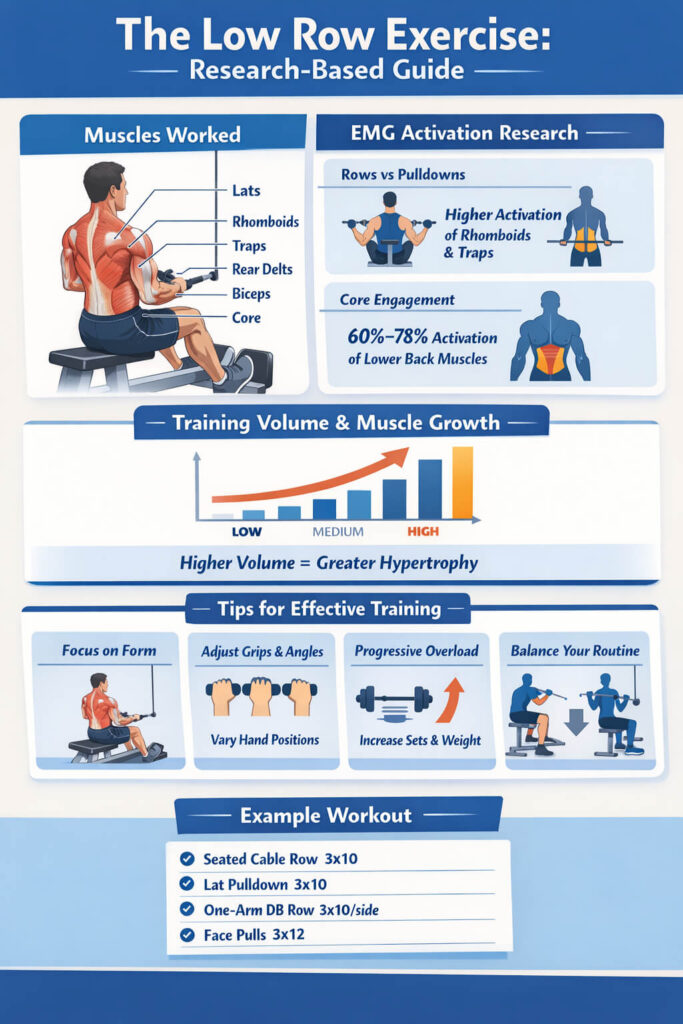
In another EMG comparison of cable rows, bent‑over rows, and machine rows, machine or cable rowing showed moderate activation of core stabilizers (erector spinae and multifidus), with activation levels between about 60 % and 78 % of bilateral effort when performed unilaterally. This suggests that even seated rows involve significant engagement of the lower back and core when done one side at a time.
Muscle Recruitment Insights
A broader analysis of rowing and back exercises shows that:
- Cable or machine rows tend to target the middle back muscles more than some variations of pulldown or bent‑over row exercises.
- Variations in grip and shoulder angle affect peak muscle activation and force produced during seated rowing. Some techniques show greater peak force output and higher EMG activation in portions of the latissimus dorsi and trapezius depending on grip and angle.
This research doesn’t single out one perfect variation, but it confirms that seated rows remain a strong choice for activating multiple layers of back musculature.
How Training Volume Influences Muscle Growth
Once you choose exercises like the low row, training volume and intensity become key drivers of growth and strength. Meta‑analytic research on resistance training shows a dose‑response relationship between volume and hypertrophy:
- Higher total weekly volume (sets × reps × load) is linked with more muscle growth over time compared with lower volume.
This means progress isn’t just about picking exercises. It’s about consistent, progressive work over weeks and months.
Results From Row‑Specific Studies
Here’s a summary of the documented research findings:
| Focus | Main Finding |
|---|---|
| Seated Row vs Lat Pulldown | Seated row tended to engage the middle trapezius/rhomboids more than pulldowns. |
| EMG Activation in Rows | Seated cable rows and machine rows show significant back muscle and core engagement, with substantial recruitment of erector spinae when performed unilaterally. |
| Grip and Angle Effects | Variations in grip and shoulder abduction change force and muscle activation, but no single configuration is always best. |
| Training Volume | Higher training volume correlates with greater hypertrophy in resistance‑trained adults. |
Practical Takeaways
Here’s how to use the data to train smarter:
1. Prioritize Form Over Weight
Proper posture and shoulder‑blade control ensure you’re engaging the back muscles you want to target, rather than letting smaller muscles or momentum do the work.
2. Include Rows in Balanced Back Workouts
Rows are complementary to pulldowns and pull‑ups. They hit muscles that help posture and shoulder health.
3. Adjust Grip and Angles Thoughtfully
Different grips change how your muscles fire. Use variation across workouts or cycles to challenge muscles in new ways.
4. Use Volume Progressively
Research shows more total effective volume leads to more muscle growth. Structured progression matters as much as exercise choice.
Example Research‑Based Workout
Here’s a sample structure based on evidence and practical experience:
| Exercise | Sets x Reps | Notes |
|---|---|---|
| Seated Cable Row | 3–4 × 8–12 | Focus on slow, controlled reps |
| Wide‑Grip Lat Pulldown | 3 × 8–12 | Adds vertical pulling to balance rows |
| One‑Arm Dumbbell Row | 3 × 8–12 each side | Helps with unilateral strength |
| Face Pulls or Reverse Flyes | 3 × 12–15 | Targets rear deltoids and traps |
Total weekly sets for back muscles should align with your experience and recovery ability. A common range is 10–20 hard sets per week, spread across 2–3 workouts.
Conclusion
The low row is more than a basic gym movement. Research shows it activates key back muscles effectively and supports balanced strength development. When combined with thoughtful variation, proper volume, and progression, it becomes a dependable tool for muscle growth and posture improvement.
